Story about a UMass student tried on charges stemming from the death of her newborn baby self-delivered in a dorm.
Video interview with homeless man in Northampton.
Wednesday, April 8, 2009


Thursday, April 2, 2009


Wednesday, January 28, 2009
Some UMass bloggers
An interesting -- maybe even inspiring? -- story about a very successful UMass blogger by another UMass blogger:
Student morphs blog into book deal
By S.P. Sullivan Bulletin Contributing Writer
Published on January 02, 2009
Zac Bissonnette in his dorm room at the University of Massachusetts. He is writing a book about how students pay for college.
Students graduating from the University of Massachusetts are entering a job market made unsteady by the national recession. UMass sophomore Zac Bissonnette, however, has a book deal to help him weather the storm.
Publishers Weekly has announced that Bissonnette, 20, an editor for AOL's financial site WalletPop.com and blogger for TheDailyBeast.com, is putting together a book for publishing company Portfolio, an imprint with Penguin Group (USA), that challenges the way parents and their children are paying for college.
The book is slated for publication in 2010. Bissonnette, who currently lives in the John Quincy Adams dormitory on campus, will be a senior by then.
Bissonnette said he started his first personal blog from a library computer at his high school in Hyannis, when he was 16, and has been doing it ever since.
He said financial blogging is something more of "personal interest" than anything else.
"I started blogging when I was in high school," he said.
"Eventually, someone from AOL saw my blog and offered me a freelance thing, which is better than doing it for free."
The UMass student said he hasn't taken any finance courses at the school, and that his major is in legal studies, not finance.
"I had to major in something, so why not that?" he said.
Bissonnette, who is paying his own way through college and has recently delved into real estate with capital earned doing freelance blogging, was invited on CNN's "American Morning" in November after writing an editorial for The Daily Beast about Barack Obama's economic policy and its effects on student loans.
Bissonnette said he got a book deal the way a lot of people do: through his agent.
"I came up with this idea, got an agent, and he put this together," he said.
Publishers Weekly reported that Adrian Zackheim and Adrienne Schultz at Portfolio outbid several other agencies for the book, which will take a critical look at the consequences of falling too deeply into debt because of student loans and weigh the value of an education from a public institution against less-affordable private ones.
Wednesday, December 10, 2008


Monday, September 15, 2008

Tuesday, September 9, 2008
Example of a speech story
Hi Everybody -- Remember, for class Wednesday: Write a lively paragraph or so with information about one or both of the speeches/events we plan to attend on Thursday, Sept. 11 by poet John Ashbery at 8 p.m. in Memorial Hall and by Kenneth Feinberg, who directed the $7 billion fund created by Congress to assist the families of those killed or injured in the Sept. 11, 2001 terrorist attacks at 4:30 p.m. in the Goodell Bernie Dallas Room. Each person only has to attend ONE of these.
We'll also discuss what you need to include in your speech story and an example of a speech story (see both below). After, we'll look at what you've posted on the blog prompted by the word "ridiculous."
Speech story (650-750 words) due next Wednesday, Sept. 17.
SPEECH PAPER ESSENTIALS
1) The lead should get to the heart of the event -- NOT just say it occurred.
2) Include in the first few sentences of the story --what the occasion was, -- who sponsored it, --where it was held and -- how many attended.
3) Nutgraph: This takes the reader beyond the lead and sums up in a few sentences the major points the speaker made or the basic gist of his/her argument/case/presentation.
4) Body of story: Take the reader through the points that the speaker made in support of his or her case/main point/argument/presentation. Provide specific examples and direct quotes.
5) Interview 3-4 people who attended for their reaction/thoughts.
Example of a speech story:
Thomas: Press 'finally coming out of coma'
BY MARY CAREY STAFF WRITER
Thursday, June 29, 2006
AMHERST - In more than 50 years 'before the mast' as a political reporter, Helen Thomas kept her opinions out of her copy.
Now a syndicated columnist, she's supposed to tell people what she thinks, the dean of the White House press corps told an audience of about 75 people Wednesday at the University of Massachusetts.
Since the foremost question on her mind is why the press is not holding the president responsible for having deceived the country about going to war, that is what she intended to talk about.
'Happily, I think the press is finally coming out of its coma, slowly,' she said. But reporters did not ask tough questions in the lead-up to the American invasion of Iraq, she maintains.
A lively hour-long question-and-answer session with Thomas, who is in her mid-80s, was one of the opening events of a three-day seminar on the future of journalism, sponsored by the Media Giraffe Project at UMass.
Thomas knows what goes on at Washington, D.C., press conferences because, for a very long time, she stood sentry there. As a longtime wire services reporter, Thomas occupied a front-row seat at press events during nine presidencies, often getting to ask the first question.
In recent years, the feisty reporter has been reassigned to a seat in the back and is rarely called upon.
Thomas recalled being in the back of the room in the days before the 2003 invasion of Iraq. She said she was 'fuming.' She prodded fellow journalists to ask the president why the country was going to war. 'And no one did,' she said. 'They asked him, 'Do you pray?' '
'Reporters, I believe, helped pave the way for the U.S. disaster in Iraq,' Thomas said.
The media, like much of the public, has been 'cowed' since the events of Sept. 11, 2001. People are afraid of seeming unpatriotic, she said, and have somehow accepted the argument that they should not question the president when the country is at war. 'There lies the fallacy,' Thomas said.
She has written a book on the subject, 'Watchdogs of Democracy? The Waning Washington Press Corps and How It Has Failed the Public.' She signed copies of the book after her talk. As the blurb on the book cover from The Washington Post put it, 'No wonder presidents have shuddered at this woman's approach for four decades!'
Sandra Howell, of Hampden, a retired professor from Springfield Technical Community College, told the audience how she and colleague Roberta Albano of Wilbraham, first encountered Thomas in a Washington hotel lobby in 2002. Thomas was talking about the coming war, said Howell, who attended Wednesday's talk with Albano.
'Was I raving?' the wry Thomas asked.
'Yes,' Howell said. 'And I want everyone to know this was before the war.'
It was the first time Howell had heard someone express skepticism about the reasons for going to war, she said. 'I was appalled,' she said.
Since then, she has had two sons go to war and return. 'We still argue about it,' she said. 'Both of them are very patriotic.'
Shava Nerad of Somerville, a conference participant waiting in line to have Thomas sign her book, recalled seeing the grande dame of the press on television over 40 years ago. At the time, she said, her mother pointed to Thomas and told her: 'See, you can do anything.'
Hearing Thomas made Emily Moses, a recent UMass graduate in journalism, want to go to Washington and ask questions. 'I feel like I now have some sort of responsibility to do something,' Moses said.
Monday, April 28, 2008
Interesting local story to discuss with chapter on liable and slander
Article about one public official leaving a "bullying" message on another public official's telephone answering machine below.
(See also the following cartoon of the Amherst town manager posted on a local blog called Only in the Republic of Amherst. What are the criteria you would use to determine if this is libelous?)

Amherst Bulletin story with MP3 link.
Excerpt from story follows:
(See also the following cartoon of the Amherst town manager posted on a local blog called Only in the Republic of Amherst. What are the criteria you would use to determine if this is libelous?)

Amherst Bulletin story with MP3 link.
Excerpt from story follows:
By Nick Grabbe
Staff Writer
and Andrew Horton
Staff Writer
Published on May 18, 2007
One elected official has accused another of threatening political retribution over a comment following last week's failed tax override vote.
Andrew Churchill, chairman of the Amherst School Committee, said a message on his answering machine from Select Board member Rob Kusner "crossed the line" and amounted to "bullying."
The override vote, which failed by 267 votes, would have provided more money for schools and town services. Following the vote, Churchill was quoted in Wednesday's Gazette as saying, "Now what? We have no money, we have no plan, and we have no leadership."
--Hear an mp3 recording of the phone call from Selectman Rob Kusner to School Committee Chairman Andrew Churchill. (Click the link to listen, or right-click to download and save the file.)
Kusner, who like Churchill supported the override, called him at 8:30 a.m. Wednesday. Kusner left a voice message saying he was "disappointed" by Churchill's "divisive" comment, adding that "I provided the kind of leadership to try to reach out to those people on the fence."
"And I expect you, if you'd like to continue in your role in Amherst government, to talk to the press and to thank me publicly for my support for it," Kusner said. He added, "Because I think there are other things that are going on now behind the scenes that could have a major effect on the School Committee."
Churchill, who transcribed Kusner's message, called it "at best ego-driven and at worst anti-democratic."
"I really don't see this as being about me," he said. "It's about having standards of acceptable behavior for town leaders, and about protecting the authority and autonomy of the School Committee."
When Churchill made the "leadership" comment, he was speaking generally and Kusner took it personally, he said.
Asked whether he had left the message on Churchill's answering machine, Kusner said that he vaguely remembers calling Churchill early the morning after the override.
But regarding any political threat, Kusner said his comments were taken out of context by Churchill. Kusner said he initially called to vent his frustration with Churchill's disparaging comments and to thank him for his support in the override, not to threaten him. Continued...
Wednesday, April 16, 2008
Queens, NY
For me, home is Queens, NY. Because it is one of the five boroughs that make up New York City, I techinically consider my hometown New York City. But because I’ve lived in Queens my whole life, I’ll focus on that. Queens is the second most populous borough of the five, the largest being Brooklyn. It has a population of about 2,229,379. Queens is considered urban, but is mostly made of urban neighborhoods and business districts. Because it’s urban, public transportation is the main means of traveling for many people. Commuting by way of subways and busses is common.

It’s home to a large immigrant community, with nearly 50% of Queens made up of immigrants. There a particularly large Indian American and Jewish population in Queens. Although this is true, it’s hard to associate Queens with just one main background because there is such variety there. Different neighborhoods are often associated with different ethnic backgrounds. Flushing is known for being largely Korean and Chinese while Astoria is known for having a large Greek population. Because of its cultural diversity, Queens is also known for the many restaurants they offer. The options are wide open.
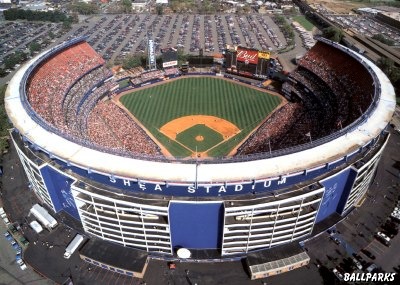
Queens is also home to the Mets. As we speak, they are building a new stadium in Willets Point, replacing Shea Stadium with Citi Field. Despite New York being mainly associated with the Yankees for the Red Sox fans here, Queens residents are huge Mets fans. For them, there’s more of a Mets/Yankees rivalry than anything else. Queens is also home to the U.S. Open tennis tournaments.
For all the dirt, grime, and urban oddities the city is known for, I love it.
Links:
http://queens.about.com/
www.nycvisit.com/
newyork.metromix.com/
It’s home to a large immigrant community, with nearly 50% of Queens made up of immigrants. There a particularly large Indian American and Jewish population in Queens. Although this is true, it’s hard to associate Queens with just one main background because there is such variety there. Different neighborhoods are often associated with different ethnic backgrounds. Flushing is known for being largely Korean and Chinese while Astoria is known for having a large Greek population. Because of its cultural diversity, Queens is also known for the many restaurants they offer. The options are wide open.
Queens is also home to the Mets. As we speak, they are building a new stadium in Willets Point, replacing Shea Stadium with Citi Field. Despite New York being mainly associated with the Yankees for the Red Sox fans here, Queens residents are huge Mets fans. For them, there’s more of a Mets/Yankees rivalry than anything else. Queens is also home to the U.S. Open tennis tournaments.
For all the dirt, grime, and urban oddities the city is known for, I love it.
Links:
http://queens.about.com/
www.nycvisit.com/
newyork.metromix.com/
Hopkinton, Ma.

Hopkinton, Ma.
Also known as H-town, Hoe-town, and Hop-town by the local youths, Hopkinton is a quiet suburb about 20 minutes outside of Boston. Predominantly made up of affluent and middle class Caucasians, the population is recorded to be around 13,346.
Once a small farming community, Hopkinton still holds much of its rural charm. If you have any intention if visiting, you better have a friend that you can stay with because there’s not even a motel in this quaint, suburban town. Changes are slowly being made, however, such as the addition of a Dunkin’ Donuts® and a Subway® built off the sides of two rebellious gas stations. Other than that, the town officials try their best to preserve Hopkinton’s country feel.
As far as tourist attractions go, there is not much to gawk at. Generally, the inhabitants bustle about their daily routines with nothing particularly exciting happening except for the frequent flow of gossip that everyone passes on.
There are only two times of the year when the whole town comes out and mingles about on the common: once in September for “Pollyarts” and once in April for the Boston Marathon. Both are traditions that have been going on for decades.
Pollyarts is an annual craft show where various creative locals set up booths of homemade jewelry, quilts, snacks, etc. and sell them. The biggest hits at this festival are the bean bag table and the fresh honey stand. All the children beg their parents for a bean bag animal made from a pattern with their favorite sport or hobby on it. As for the adults, they all line up to get their share of the delicious honey. While their parents examine the various sized jars and bee wax candles, the kids can watch the honeybees busy at work in the portable hive that the town beekeeper has brought for the youngsters enjoyment.
After shopping, the town’s people can grab lunch at the hot dog stand or stroll over to get a treat at the van selling fried dough and cotton candy. Entertainment is provided by Patricia Brosnihan’s in-town dance studio. All the young stars line up on the small wooden stage to show off their new moves. This event may not be overly thrilling, but for Hopkintonians it’s a nice, relaxing get-together that everyone can look foreword to from year to year.
The other major town event in Hopkinton is far more stressful for the town’s people. Hopkinton is the start of the Boston Marathon – a difficult 26 mile race through the various suburbs leading up to Boston. For this occasion, many weeks of preparation must go in to making sure the small town is ready for the plethora of people that will soon be carelessly trampling around. The starting line has to be painted, tents need to be posted to protect the runners from harsh weather conditions, and facilities need to be provided so the runners can use the bathroom, if needed, before the race.

On marathon day the streets are crowded with newscasters, town volunteers, and runners from across the globe. Healthy food and beverage stands cover the common and the middle school lawn. The middle school, at this point, has been turned in to what is called “Marathon Village.” Here, shuttle busses come and go, bringing runners and spectators around town since the roads are closed to all other vehicles. After the race, the whole town pitches in to help remove the trash and discarded clothing from the street. The trash is promptly taken away and all the extra clothes are quickly shipped off to local charities and shelters. All in all, the Boston Marathon is a very big deal for Hopkinton and is a very fun experience for spectators and runners alike.
Click Here to see pictures of how Hopkinton has changed over the years
Wednesday, March 5, 2008
Hwei-Ling Greeney
By Kate Dillon
California Gov. Arnold Schwarzenegger was an action hero. Former Minnesota Gov. Jesse Ventura was a professional wrestler. Amherst Select Board member Hwei-Ling Greeney picked asparagus in Hadley.
It was a natural career choice for the ultra-frugal Greeney. If reelected to the Select Board on April 1, she plans to try to run Amherst on her thrifty business model.
Greeney wants to strengthen the town's current agreement with the University of Massachusetts so that the university pays more money for services that Amherst provides, including ambulance, fire and educating the children of graduate students, she said.
Another of her goals is to get other towns that use Amherst's ambulance services to pay a larger share for them than they do now.
She is promoting "social host" legislation that would hold students living off campus in Amherst and Hadley responsible if emergency services have to respond to a renter's house.
Some residents are charging $2 a cup for beer, and "make $800 in one night" to pay their rent, she said. But when things get out of hand, police have to break it up, costing the town money, according to Greeney.
Greeney is director of the soup kitchen Not Bread Alone.
Her husband, Robert Greeney, is a physics professor at Holyoke Community College.
California Gov. Arnold Schwarzenegger was an action hero. Former Minnesota Gov. Jesse Ventura was a professional wrestler. Amherst Select Board member Hwei-Ling Greeney picked asparagus in Hadley.
It was a natural career choice for the ultra-frugal Greeney. If reelected to the Select Board on April 1, she plans to try to run Amherst on her thrifty business model.
"I'm a very frugal person, and there is always a way to make do with what you have," said Greeney.
She is one of five candidates running for two seats. The others are Stephanie O'Keeffe, Irvin Rhodes, David Keenan and Diana Stein.
She is one of five candidates running for two seats. The others are Stephanie O'Keeffe, Irvin Rhodes, David Keenan and Diana Stein.
Another of her goals is to get other towns that use Amherst's ambulance services to pay a larger share for them than they do now.
She is promoting "social host" legislation that would hold students living off campus in Amherst and Hadley responsible if emergency services have to respond to a renter's house.
Some residents are charging $2 a cup for beer, and "make $800 in one night" to pay their rent, she said. But when things get out of hand, police have to break it up, costing the town money, according to Greeney.
She advocates a policy that doesn't arrest and send people through the court system,wasting town money on policing and not helping anyone. Rather she preaches a policy more centered on civil action against the offenders by doling out fines which can then be used to pay for other services.
Greeney also would like to see UMass contribute more for services some students use such as the public schools for their children.
Greeney says it costs Amherst "$10,000 a year for a regular student and $18,000 for a student with special needs."
She does not want to see expenditure on town maintenance and other services cut down, rather she wants to see town revenues go up. She promotes regionalizing "for an economy of scale" and thinks that Amherst needs to work with the other towns in the Pioneer Valley to better suit all their needs.
Greeney is also very big on cutting down carbon emissions here in the town and wants to see more green projects being taken on in Amherst.
"The town budget is a meat and potatoes issue, so most people care about it, but we want to keep Amherst affordable, support small businesses and keep Amherst green," she said.
When asked who she'd prefer to work with out of her opponents, Greeney countered like a true politician, saying that although there were differences in temperament between her and her challengers, she was willing to work together with any of them for the good of the town.One of Greeney’s campaign goals is to keep Amherst strong by supporting local businesses. “I’m a big proponent of shopping local,” said Greeney, who is not a supporter of bringing “big box stores into Amherst.”
Instead, Greeney hopes to economically strengthen Amherst through “knowledge based, creative economy and tourism.” For example, Greeney supports building retirement housing in Amherst which would bring in a large amount of revenue for the town.
"I must have the ability and the willingness and the desire to work with anyone on the board," she said during a recent interview with UMass journalism students.
Greeney acknowledged meetings can go on for a very long time, sometimes five hours.
"The Select Board members like to talk." Unlike other bodies of government, "We allow the public to come into the conversation; we solicit their opinions," she said.
Greeney maintains she adds a lot to the board.
"I'm a team player, reaching out to neighbors and always the first person on the scene to investigate the issue," said Greeney.
A native of Taiwan and the mother of four grown children, Greeney moved to Amherst from Tennessee with her family, because they were attracted to the school system, she said.Greeney is director of the soup kitchen Not Bread Alone.
Her husband, Robert Greeney, is a physics professor at Holyoke Community College.
Monday, February 25, 2008
AP Style Tip - Web site, Internet
In news stories, "Web site" is always capitalized and spaced..."Internet" is also capitalized.
Wednesday, February 20, 2008
AP Style Tip: Historic vs. Historical
With the presidential elections less than a year away, journalists and pundits would likely use words like "historical" and "historic" to describe a victory by Barak Obama or Hillary Clinton.
But which word is the correct one to use? According to the AP stylebook, "A historic event is an important occurrence, one that stands out in history. Any occurrence in the past is a historical event."
In other words, go with historic if you're describing a specific event. Although every historic event is historical, not every historical event is historic.
And for those prone to malapropisms, avoid using "hysterical" in all circumstances.
Wednesday, December 12, 2007


Monday, November 5, 2007
2 Ap Style Rules I Enjoy
My two AP Style pointers.. I hope it is my turn. I decided not to check before I posted this.
these are also from a website that has the rules explained by a journalist or teacher, can't remember I wrote it down in a notebook somewhere.
1.it's, its -- "It's" is a contraction that means it is, or it has. "Its" means "belonging to it." Whenever you must choose one or another in a sentence, try inserting the phrase "it is" or "it has." If one of those pairs makes sense, then use it's. I use funny word associations to remember things like this. Technically, they are called mnemonic devices (as in the movie, Johnny Mnemonic). When I see the word "it's," I tell myself "the apostrophe means 'to be.'")
2.lay, lie -- Not as tricky as it might seem. The way I remember the difference is that "lay," in the present tense, requires an object; in other words (pardon me) you can only "lay" something. The word "lie" in the present tense means recline on a horizontal plane. Examples in the present tense: I lay the book on the table. Now it lies there. In the past tense, lay becomes laid, and lie becomes lay. Examples: I laid the book on the table yesterday. It lay there for several hours before my brother picked it up.
Saturday, September 22, 2007
Thursday, May 10, 2007


Monday, April 2, 2007
Interesting story
Hi All -- This is an interesting feature from Sunday's Berkshire Eagle written in the first person by a reporter whose high school class was visited by a lot of misfortune. I'd be interested to hear what people think of it.
--Mary
So much HOPE, so much TRAGEDY
The Wahconah Regional Class of 2000 began its journey with great expectations. But how it turned out is anything but inspiring.
By Jenn Smith, Berkshire Eagle StaffBerkshire Eagle
Sunday, April 01
The first death came a month after we graduated.
It was mid-July of 2000, and I had moved to Cape Cod to live with my great-grandmother for the summer. I wanted to work and save money for my freshman year of college in the fall.
Graduate from high school. Go to college. Get an education. Find a job. Leave the homeland.
Life was just beginning for me and for others in the Wahconah Regional High School Class of 2000.
I was sitting on my living-room floor reading The Cape Cod Times with my breakfast tea when I saw it:
Jeffrey C. Johnson, 18 ... died ... graduated ... Wahconah ... June ...
He had transferred to Wahconah from the Cape town of Sandwich during our sophomore year. He was perpetually the new kid, transferring back and forth. He struggled with teachers and friendships but worked hard and graduated.
Nearly seven years later, I read on his death certificate that he had committed suicide by overdosing on drugs and alcohol.
At my great-grandmother's on that July 2000 day, I slumped back against the base of the couch.
"This is my classmate," I thought. I then corrected myself: "This was my classmate."
We are Wahconah Warriors, but nothing taught in the classroom could prepare us for this kind of devastating news.
Reality is cruel.
Four years later came two more deaths from the Class of 2000: Justin M. Farrell, who died in a car accident, and David C. Sullivan, who was fatally shot by a former Wahconah student.
My classmates made headlines again in 2006 with two murder convictions and life sentencings: Bryan R. Johnston in the Sullivan death, and Damien J. Lamb in the death of Pittsfield resident Brandon LaBonte.
In just six years, our legacy as a great-expectations class of the new millennium had become marred by three deaths and two murder convictions.
Alfred T. Ingham, a criminologist and professor at Western New England College in Springfield, said it's difficult to say what led to this concentrated number of incidents.
"No one ever kept track of stuff like this," he said. "This might be one heck of a coincidence. There might not be any logical explanation."
The headlines were inescapable. They linger not only in the shadows of the minds of classmates, but in the minds of families, friends and faculty members.
"People will always go, "You went to Wahconah. Oh, you're the class that ...," said classmate Lori Mullett, a former softball player who works as a manager at Best Buy at the Berkshire Mall.
Mullett and I are among the 161 graduates of the Wahconah Class of 2000. Most of us are simply trying to carry on.
But understanding how we got here requires looking at where we came from.
'Symbolic ambassadors'
In September 1988, the members of the high school graduating class of 2000 — more than 3 million strong — entered first grades across the United States.
Even at that age, we already were in the news.
"These children are the future high school graduates of the Class of 2000, and as such, have been targeted to become the symbolic ambassadors for a smoke-free society," Arlene Evans wrote in a 1988 article for Pediatrics for Parents regarding a campaign announced that year by the U.S. surgeon general.
"You guys started the century off," said Thomas J. Callahan, the Wahconah principal in 2000. "By being the first class, you do have expectations."
We may have bought the grammar-school hype, but by the time we reached high school in September 1996, many of us were smoking, and the millennial significance of our class was an afterthought.
"I never thought it was that big of a deal. I think it was more of what people expected out of us," said classmate and former cheerleader Cassie (Jordan) Burke of Claremont, N.H., who is applying to beauty school this spring.
In 1996, CBS News began a four-year study of members of the Class of 2000 across the country.
The network spoke with more than 2,300 students who were part of this demographic, and in the summer of 2000 produced an e-book titled "The Class of 2000: A Definitive Survey of the New Generation."
The study noted how our class grew up enjoying a booming economy but also lived through a presidential sex scandal and impeachment; the dawn of a new century and fears of a Y2K technology crash; the rise of the Internet; and a wave of school violence, including the shootings at Columbine High School in Colorado.
"The Class of 2000 is a generation that has been marked by hardship ... often feeling they had prematurely become adults," wrote Carolyn Mackler, an author of the study. "After all, having sex means you can wind up with AIDS, attending school means you can get shot, and just saying no to drugs can mean being shunned."
Adolescent struggles
As with any high school student, members of the Wahconah Class of 2000 were preoccupied with hormones, home life and homework — all of which made life inside the school's walls challenging and chaotic.
"Like countless other adolescents, high school was a very hard time for me," said classmate Phoebe Clune, now a Northeastern University student and a payroll administrator for Boston's New England Aquarium.
Classmate Mike Swail and others noted the "bad parts" and "the drama," but many of us turned to our families for support and guidance.
"The fact that I had a good family life also made it easier to enjoy high school," said Swail, a mechanical engineer for Sensata Technologies in Attleboro. "I can completely understand that those of us who had a tough family life probably had a tough high school experience."
When asked whether we were a close or outstanding class, answers ranged from "strong" to "clique-y" to "not tight at all."
"It was not a class that moved together," said Terry Elwood, a former Wahconah foreign-languages teacher and a parent of a student in the class.
Former class president Seth Karpinski, now a high school physics teacher at Hackley School in Tarrytown, N.Y., said the class had struggles amid other classes.
"I felt like we were a bit in the shadows," he said.
Several classmates agreed, saying we didn't have the same caliber of strong athletes, academics and artists as our predecessors.
"No one really stood out," said Bridget Martin, who finished a master's program last summer in medieval studies at the University of Connecticut.
She also said that being in a spread-out school district added to the struggle. Seven small towns feed into Wahconah, along with school-choice students from the region.
"There was no place where we all met except school," Martin said.
We felt isolated, but we had our moments to shine.
Amy Welch, an assistant bakery manager at the Hannaford Supermarket in East Greenbush, N.Y., recalled an intimate memory about late classmate Jeffrey Johnson:
"I did not know Jeff, and he didn't know me," she said. "At the senior banquet, during the last song, I was doing my shy-loner thing sitting by myself, and Jeff asked me to dance with him. Totally out of nowhere. So I danced with him. He was very sweet. He asked me what my name was and told me I looked nice. He made me feel good about myself.
"I wish I had gotten to know him better. Every time I hear that Aerosmith song ("I Don't Want to Miss a Thing"), I think of him. It was only a month or so later when I heard he died. I realized we weren't kids anymore."
'Looking to get out'
For a while after Jeff's death, things seemed quiet. For the most part, my class went one of three ways: college, the workforce, the military.
"I think we were all looking to get out," said Jeff Fox, now a financial auditor in Providence, R.I.
We tried to move on, to grow up.
Instead of meeting at Friendly's for ice cream, we met over a couple of beers at Jacob's Restaurant or The Dalton Depot.
We grew older; some of us grew wiser.
Some grew closer and stronger; some of us grew distant.
Four years after Wahconah, many of us found ourselves upon college graduation.
A chance to start anew.
Then it happened again.
In May 2004, classmate Justin Farrell, a former member of the Wahconah cross-country, ski and tennis teams, was killed when the sport utility vehicle he was driving collided with a tractor-trailer on Route 9 in Windsor.
He was 22.
"It was awful," said Laura Hess, a friend of Farrell's and a nursing student at the University of Colorado at Denver.
"The drama never ends; it just gets more serious," said classmate Stephanie Sinclair, a merchandise supervisor at Manhattan's Banana Republic. "We're grown-ups now, and it's scary as hell."
Seven months later, the class and the region were dealt a shocking blow that involved two classmates.
On Dec. 7, 2004, near the Amherst campus of the University of Massachusetts, Bryan Johnston fatally shot David Sullivan with a high-powered assault rifle in Sullivan's apartment.
"When they tell you the worst thing that could happen in life is to lose a child, they're right," said Daniel C. Sullivan, David's father. "There is no closure to be found."
The fact that Johnston was the son of a well-known Wahconah science teacher, Bruce Johnston, made the situation more painful.
The incident permeated not only through two families and a group of friends, but through a class, a school, a town.
"In a close-knit community like Dalton, that affects everyone," said Dalton Town Manager Kenneth Walto, a parent of a Class of 2000 member. "No one's just a bystander."
In August of 2005, the Wahconah wounds were reopened when Rolling Stone magazine ran a story titled "The Loser" by Peter Wilkinson.
The article detailed the lives of Johnston and Sullivan, depicting Johnston as "a spoiled, indolent rager" and Sullivan as "the popular boy, the football star."
"The Loser," which included yearbook photos of the boys as well as a layout full of blood-spattered pull quotes, ran as a six-page spread at the heart of the magazine.
Class members called it "reactionary" and "biased" and said it included a lot of "labeling."
"If this happened to two urban kids in New York City, you wouldn't see it in the magazine," Lori Mullett said.
"It gave me a queasy feeling in my stomach, and still does to this day," said Nick DiSantis, a friend of the two young men.
Throughout Johnston's trial, it was constantly argued that his actions were due to drug use and mental illness.
"This just goes to show you what drugs can do, and it really hit home this time," DiSantis said. "Being from the Berkshires, not much is going on around here, and I believe drugs are one of the biggest problems this area has."
Wilkinson told The Eagle that the murder contained elements of the school shootings at Columbine High School in Littleton, Colo.
"With Johnston, there was a clear pattern of erratic, violent behavior involving guns over a period of years," Wilkinson said. "I got the sense his friends covered for him, and by the time anybody stepped in, it was too late."
Johnston was sentenced to life without parole. Less than six months later, in October 2006, former classmate Damien Lamb was found guilty of murder in the 2005 disappearance of Pittsfield resident Brandon LaBonte.
According to accounts, Lamb, a martial-arts expert, had handcuffed LaBonte, strangled him with a rope, and then beat him to death in connection with a $150 debt that LaBonte owed Lamb.
Though Lamb didn't graduate from Wahconah in 2000, he took classes with us through our senior year. For that he is considered by many to be a part of the class.
Cry for help?
I remember Damien at his best in a middle-school Spanish class. We were class partners. He had long hair and wore tie-dyed T-shirts. He was quiet but easy to joke with.
One day in class we were studying beach-related vocabulary. The textbook illustration included a man in the middle of the ocean shouting "Socorro!" — "Help!"
We would joke about it and say socorro when we got homework or were walking through the halls at school. It became a way of getting one another's attention.
Even in later years, when he worked as a security guard at the Berkshire Mall, he would shout it to me from across the food court.
During his trial, Lamb was described as a "tough guy" who exerted control over his friends and associates. But other classmates said they never saw it in his character.
"I will never forget the day I was watching TV, and there was Damien Lamb standing in the courthouse being charged for killing someone," Cassie Burke said. "He was supposed to be my daughter's godfather. I think that was the one that hit home."
Even today, I can't help but wonder if Lamb's socorro became a greater cry for help.
Visit with an inmate
On March 20, the day before my 25th birthday, I drove to the Souza-Baranowski Correctional Center in Shirley, the current home of Johnston and Lamb.
It's a maximum-security prison, and the two are just a cell floor apart.
In response to letters I sent them, both men said last month that they are appealing their murder convictions. Though Johnston said he could not speak with The Eagle because of his appeal, Lamb agreed to.
When Damien and I met, he shook my hand, and we both smiled. It felt like any high school reunion — friendly and awkward.
I asked him what he thought of high school and our class.
"When you're here, you have nothing to do but think," he said. "I think about our class a lot and wonder what happened to them."
Though inmates are allowed to leave their cells for only three hours a day, Lamb said he sees Johnston a lot. Even though Lamb said they weren't good friends in high school, they still talk.
"When I saw him in here, even though I knew what happened with him and Dave (Sullivan), it was like, it's still Bryan. We were in the same class and we went through school together," Lamb said. "There's still some respect."
We're in this together.
The tragedies in the Wahconah Class of 2000 affected each of us, even if we weren't good friends with the people involved, even if we weren't a close class.
A few other classmates, including Wes Horth, now an electrical engineer in Boston, wonder if things would have been different if we had spent more time together.
"We didn't hang out as a class. It would've been nice to have the memories," he said.
On graduation day, Seth Karpinski, our class president, urged us to "remember where we came from and encourage our small-town values, no matter where life takes us."
"When I said that, I didn't know the magnitude of the phrase," he said. "I can't stress that enough now."
As a high school teacher, Karpinski said he sees just how easily social fibers can weaken, but notices how just a smile or a kind hello can make a difference.
"It doesn't happen very often when you're in high school that you acknowledge the person across the class as someone in the same boat as you," he said. "As I get older I see how valuable it is ... to recognize the people around you as people."
But stepping away from ourselves, many of us realize this chain of events could happen to any class, in any high school, in any town.
"I feel that people involved in these unspeakable 'tragedies' were not victims of a bad high school, or the astrological significance of the millennium. They simply lost what made them live lovingly," said classmate Brian Kulas, now a sales associate for Barnes & Noble in Pittsfield. "I think with the Year 2000, lots changed in the world, and we were on the cusp of that."
Being on the brink of change brings a mixture of excitement and expectation — whether it be a new year, a new child, or a new career.
Lamb made a point during our conversation: "The bigger the setup, the harder the fall," he said. "Overall, there are a lot of good people in our class. But such (high) expectations were unrealistic."
When we graduated, the world was open to us.
Seven years later, for some of us, it is closed — in prison cells and in caskets.
But for the rest of us, the millennium moves on.
» The breakdown
Three deaths and two murder convictions have hit the Class of 2000 at Wahconah Regional High School in Dalton:
July 2000: Jeffrey C. Johnson, 18, dies at home in Hinsdale a month after graduating. According to his death certificate, he committed suicide by ingesting and overdosing on drugs and alcohol.
May 2004: Justin M. Farrell, 22, dies in a crash in Windsor after his sport utility vehicle collided with a tractor-trailer. The truck driver sued and won a settlement in November 2006 of more than $300,000 from the "estate of the deceased."
December 2004: David C. Sullivan, 22, dies of gunshot wounds allegedly inflicted by close friend and former classmate Bryan R. Johnston. The shooting occurred near the University of Massachusetts campus in Amherst.
April 2006: Johnston, 24, is convicted of first-degree murder in the Sullivan death and is sentenced to life without parole, the maximum sentence under state law. Johnston also is found guilty of armed burglary, use of a firearm in the commission of a felony, and possession of a large-capacity firearm in connection with the death. Johnston is serving his life sentence at a maximum-security facility at the Souza-Baranowski Correctional Center in Shirley.
October 2006: Damien J. Lamb, 24, is found guilty of second-degree murder for slaying 21-year-old Brandon LaBonte in Becket in 2005. LaBonte's body was never found. Lamb is serving a life sentence — with a chance of parole after 15 years of incarceration — in the same state prison as Johnston.
March 2007: Johnston sends a letter to The Eagle stating that he is appealing his murder conviction. Lamb says during a face-to-face interview that he is appealing his conviction.
Source Eagle files
Monday, February 19, 2007
Sample nutgraph

Hi All -- Here is the explanation in our text of what a nutgraph is (Chapter 8, page 209 in my edition): "A 'nut' section or 'hoohah' (I've never heard this expression at the paper, by the way) that explicitly states the premise of the story, outlines the major points and sells the story by tempting readers with some of the most engaging quotes, tidbits of information and previews of coming attractions.
This section should also tell readers why the story is so important, or new or different. There should be enough fanfare about the story's significance to convince readers that it's well worth the investment of the next 20 minutes of their lives."
Here's a nutgraph (in bold) in the first few lines of a story I recently wrote:
A couple of weeks ago subscribers to an online forum for Amherst Town Meeting members complained that Select Board member Robie Hubley was using the forum for campaign purposes.
This week, Select Board Chairwoman Anne Awad, Hubley's wife, is complaining that one of her husband's opponents in the March 27 election is using an email listserv to further her own political campaign.
Signs of the Internet's growing influence in small town elections are popping up all over in a campaign season marked by unusually high tension, resulting from a looming $3.7 million shortfall in the budget.
Photo is of fox tracks on an Amherst trail Saturday. See you Wednesday.
Subscribe to:
Posts (Atom)