Wednesday, January 27, 2010


Chapter 15 worksheet
Tuesday, January 26, 2010
AP Style Tip: Percentages
Example: The price rose 20 percent.
Monday, January 25, 2010
Robert McChesney and John Nichols event
February 1st 2010 Lecture/Reading
Time 5:00 pm
Admissions / Ticket information Free and open to the public.
Campus UM
Location Bernie Dallas Room, Goodell Building
Title Talk and Book Signing by Robert McChesney and John Nichols
Robert McChesney and John Nichols, the award-winning authors of twenty books on media and politics, will speak about their newest book, The Death and Life of American Journalism. Followed by a book signing.
Event sponsored by the UMass Department of Communication, the Political Economy Research Institute (PERI), and the Media Education Foundation.
Check out this biographical information about McChesney and other material you can find online in advance of the talk.
The speech assignment should be 750 words (include a word count after your name and date) and the basics are:
1) The lead should get to the heart of the event -- NOT just say it occurred.
2) Include in the first few sentences of the story --what the occasion was, -- who sponsored it, --where it was held and -- how many attended. (We'll talk about how to estimate how many people are in the audeince.)
3) Nutgraph: This takes the reader beyond the lead and sums up in a few sentences the major points the speaker made or the basic gist of his/her argument/case/presentation.
4) Body of story: Take the reader through the points that the speaker made in support of his or her case/main point/argument/presentation. Provide specific examples and direct quotes.
5) Interview 3-4 people who attended for their reaction/thoughts and include direct quotes.
Sunday, January 24, 2010
Worksheets for Chapters 5 and 16
JOURN 300/SPRING 2010
CHAPTER 5/LEADS
1) It's good to start a story with a quote. True or False
2) It's good to start with a question. True or False
3) The lead does not have to be grammatical. True or False
4) Explain why the following are good or bad leads: A) A snowplow hit a cow on South Pleasant Street, Thursday, splattering its guts all over the road. B) When the mayor announced there would be deep cuts in next year's budget, she let the cat out of the bag.
5) Is it a good idea to start thinking about your lead at the same time you are reporting a story?
6) Which of the following two leads is best and why? A) A Harvard sociologist studying teen-age pregnancy gave a speech last night to more than 200 students and faculty members in Hall Auditorium. B) Teen-age pregnancy is costing the country billions of dollars a year, a Harvard sociologist told students and faculty Monday.
7) Will any anecdote or incident related to the story suffice as a delayed lead?
8) You go to a city council meeting that lasts two hours. Board members spent the first 15 minutes discussing whether they should meet on Tuesdays instead of Thursdays, an hour listening to reports from the DPW and Council on Aging directors, approved four taxi-driving licenses and voted to close City Hall on Fridays. What would you report in the lead?
9) Should you make sure to include the who, where, why, what and how of an event in the lead even if it makes the lead, hard to read and clunky?
10) Is the following a good lead? Ayla Brown, a Boston College student, will appear on "American Idol" this season.
CHAPTER 16/SPEECHES, MEETINGS and NEWS CONFERENCES
1) If something unusual occurs at a speech event, it's best to just leave it out and focus on the theme of the speech. True or False
2) If the reporter is unsure of the main theme of a speech, what is one way to try to find out what it was?
3) Could an interesting story be written about a dull speech?
4) Does the reporter have a right to be present an an official, public meeting and report on anything he or she sees or hears? Is the same true of a private meeting?
5) What does off- and on-the-record mean?
6) Is it a good idea to get a meeting agenda ahead of time?
7) Is there any reason why you interview someone who wasn't at a meeting for a story about it?
8) Should you include direct quotations from a speech or meeting and, if so, who should you quote?
9) Research online the Massachusetts Open Meeting Law at http://www.mass.gov/legis/laws/mgl/39-23b.htm and briefly explain it.
Thursday, January 21, 2010
Coming event
There is a Facebook page, where it says you can go to the Fine Arts Center and get two tickets with your student ID. It seems like a good idea to get two tickets each ASAP.
Wednesday, January 20, 2010
Spring 2010 schedule and syllabus
JOURN 300/CAREY/ SPRING 2010--M/W 3:35-5:30 p.m.-Dubois 720
This is a tentative schedule of topics subject to revision to accommodate the news, campus goings-on that we’ll attend and classroom visitors. Check the blog (Journ300.blogspot.com) for updates and changes. Each day 3-4 people will bring in an article to discuss and post an "AP Style tip" to the blog.
JAN 20 Introduction, In-class writing assignment. Next: read Chap. 5; write 300-word summary for next class. Bring three or more ideas of speeches/events to attend at UMass or nearby in the coming days.
JAN 25 Discuss Chap. 5 and speech options, in-class exercise on leads. Next: Read Chap. 16 on speeches, write 200-word summary for next class.
JAN 27 Discuss chapter on speeches, how to write a speech story. In-class work on blog. Next: Read Read Chap 15 on Interviewing Principles to discuss. Write 6 "bullet points" based on information in chapter.
REVISED:
Monday, FEB. 1 --We attend the Robert McChesney-John Nichols speech, beginning at 5 p.m. after we talk about Chapter 15 and the profile pitch. Next: Write a brief profile pitch to present Wednesday.
Wednesday, FEB 3 -- Discuss McChesney-Nichols event. Present profile pitch. Next: Speech paper due Monday. Read Chaps. 2 and 3.
Monday, FEB 8 -- SPEECH paper DUE (750 words). Discuss Chaps. 2 and 3
Wednesday, FEB 10 -- In-class work on profiles. Read Chap. 7 on the Writer's Art. Write 100-200 words SHOWING something (vs TELLING)
Monday, FEB 15 NO CLASS
Wednesday, FEB 17 -- FIRST DRAFT PROFILE DUE Discuss feature stories. Discuss Chapter 7 and SHOW v. TELL examples. In-class work on profiles. Next: in-class feature pitch, read Chap. 8 on Features.
REVISED
FEB 22 Have read Chapter 8 on features to discuss. Peer edit first draft profiles. (Final draft is now due Wed., Mar. 3) Next: Read Chapter 18 on Accidents and Disasters and Chapter 19 on Obituaries.
FEB 24 FEATURE PITCH. Discuss chapters on accidents and obituaries. Next: read Chapter 21 on Courts.
MAR 1 In-class work on feature and blog, discuss Chap. 21 on Courts
MAR 3 FINAL DRAFT PROFILE DUE (1,000 words, include word count) In-class work on feature drafts Discuss Issue paper requirements, including interviews with 2-3 "experts." Next: read Chaps. 11 on layered reporting. and 14 on sources.
MAR 8 MID-TERM QUIZ Discuss Chap. 11 and 14.
MAR 10 FIRST DRAFT FEATURE (1,000 words, include word count) DUE. Discuss issue paper ideas and strategy. Next: Issue pitch.
SPRING BREAK
MAR 22 Discuss issue ideas, experts. In-class work on blog.
MAR 24 Issue pitch.
MAR 29 In-class work on Issue papers. Next: read Chap 20 on police.
MAR 31 FINAL FEATURE (1,000 words, include word count) DUE. Discuss Police chapter. In-class work on issue, blog. Next: read Chaps. 26 on Taste in Journalism and 27 on Morality.
APR 5 ISSUE DRAFT DUE DATE POSTPONED TILL APRIL 12 (with four voices, two of whom are "experts") due. Discuss chapters on Taste and Morality.
APR 7 INTERVIEWS WITH 2 EXPERTS DUE!!!In-class work on Issue paper, blog. Watch video "Independent Media in a Time of War" and discuss with reference to chapters on Morality and Taste. Next: Read Chaps. 24 and 25 on Government and Reporters and the Law.
APR 12 FIRST DRAFT ISSUE DUE!!!!!Discuss Open Meeting, definitions of slander etc.
APR 14 , discuss Chapters 24 and 25
APR 19 NO CLASS
APR 21 FINAL DRAFT ISSUE DUE!!!!!Discuss review writing, issue paper issues.
APR 26 Watch film and write REVIEW (10 percent of final grade) on deadline, due at end of class.
APR 28 Begin review of take-away points from the class
MAY 4 LAST DAY OF CLASS/ REVIEW
JOURN 300 :NEWSWRITING and REPORTING, Spring 2010
MARY CAREY mary.carey@att.net, 413-549-4595, 413-219-7772 (cell), Journ300.blogspot.com
REQUIRED TEXTS
Melvin Mencher, News Reporting and Writing (latest edition)
ADDITIONAL REQUIRED READING
Daily newspapers and news magazines. Try to scan online or in print at least one of the local newspapers including the Collegian, Daily Hampshire Gazette or Springfield Republican every day. Also be aware of what’s on the front page of, for instance, the Boston Globe and New York Times. Each class, three or four people will bring in a newspaper article and comment on some aspect of the news, news coverage, style, choice of stories or contrast between coverage. Being conversant with what is in the news is essential to writing it.
GRADES
Grades are based on timely and thoughtful completion of in-class and out-of-class writing assignments and quizzes, attendance and in-class participation. Writing criteria include news judgment, clarity of writing, grammar, accuracy, organization, spelling, conciseness, use of AP style, and meeting deadlines. Although the big picture things like news judgment and solid reporting are important, misspelling names and other seemingly minor shortcomings can ruin a story and your reputation, so they will count. Numerical equivalent of grades: A=95, A-=92, A-/B+ =90, B+88 etc.
ATTENDANCE
Not making appointments or missing the action will also undermine your career and the class. You MUST tell me BEFORE class if you are going to be absent and it has to be a legitimate excuse. (I read my e-mail regularly and have a phone message machine at home.) Otherwise you will receive zeroes for the day’s assignments. Please do not be late or leave early. More than three absences and/or repeatedly being late or leaving early will result in a significantly lowered final grade. We'll follow university guidelines regarding swine flu.
WRITING ASSIGNMENTS
In-class writing assignments usually won’t be longer than 2-3 typewritten pages. Most major assignments are 1,000 words or 4 pages. Among your assignments are a profile (counts for 15 percent of final grade), feature (15 percent), coverage of a speech (15 percent), issue piece (25 percent) and review (10 percent), minor papers, including first drafts (10 percent), participation/homework, worksheets and quizzes etc (10 percent).
HONESTY
There’s no excuse for any dishonest use of material. Any instance of plagiarism or any other form of cheating is ground for course failure.
Saturday, November 21, 2009

Wednesday, September 30, 2009
What makes a good blog post?

Michael Jackson photo courtesy Google images. Idea by Maia.
A good blog post has
1) lively voice, timely subject
*Make it professional; use AP Style and proofread.
2) photo(s) and or video(s) with credit
*TIP: To ensure that your photo goes where you want it to in relation to the text, add the following bit of HTML code right after the photo/ before your text and at the end of the text, before the next photo: br clear='all'
3) Links
4) data, info
5) enticing title
6) helpful labels
Thursday, May 7, 2009


Wednesday, April 8, 2009
Links to story about UMass student and homeless man in Northampton
Video interview with homeless man in Northampton.
Thursday, April 2, 2009


Wednesday, January 28, 2009
Some UMass bloggers
Student morphs blog into book deal
By S.P. Sullivan Bulletin Contributing Writer
Published on January 02, 2009
Zac Bissonnette in his dorm room at the University of Massachusetts. He is writing a book about how students pay for college.
Students graduating from the University of Massachusetts are entering a job market made unsteady by the national recession. UMass sophomore Zac Bissonnette, however, has a book deal to help him weather the storm.
Publishers Weekly has announced that Bissonnette, 20, an editor for AOL's financial site WalletPop.com and blogger for TheDailyBeast.com, is putting together a book for publishing company Portfolio, an imprint with Penguin Group (USA), that challenges the way parents and their children are paying for college.
The book is slated for publication in 2010. Bissonnette, who currently lives in the John Quincy Adams dormitory on campus, will be a senior by then.
Bissonnette said he started his first personal blog from a library computer at his high school in Hyannis, when he was 16, and has been doing it ever since.
He said financial blogging is something more of "personal interest" than anything else.
"I started blogging when I was in high school," he said.
"Eventually, someone from AOL saw my blog and offered me a freelance thing, which is better than doing it for free."
The UMass student said he hasn't taken any finance courses at the school, and that his major is in legal studies, not finance.
"I had to major in something, so why not that?" he said.
Bissonnette, who is paying his own way through college and has recently delved into real estate with capital earned doing freelance blogging, was invited on CNN's "American Morning" in November after writing an editorial for The Daily Beast about Barack Obama's economic policy and its effects on student loans.
Bissonnette said he got a book deal the way a lot of people do: through his agent.
"I came up with this idea, got an agent, and he put this together," he said.
Publishers Weekly reported that Adrian Zackheim and Adrienne Schultz at Portfolio outbid several other agencies for the book, which will take a critical look at the consequences of falling too deeply into debt because of student loans and weigh the value of an education from a public institution against less-affordable private ones.
Wednesday, December 10, 2008


Monday, September 15, 2008

Tuesday, September 9, 2008
Example of a speech story
We'll also discuss what you need to include in your speech story and an example of a speech story (see both below). After, we'll look at what you've posted on the blog prompted by the word "ridiculous."
Speech story (650-750 words) due next Wednesday, Sept. 17.
SPEECH PAPER ESSENTIALS
1) The lead should get to the heart of the event -- NOT just say it occurred.
2) Include in the first few sentences of the story --what the occasion was, -- who sponsored it, --where it was held and -- how many attended.
3) Nutgraph: This takes the reader beyond the lead and sums up in a few sentences the major points the speaker made or the basic gist of his/her argument/case/presentation.
4) Body of story: Take the reader through the points that the speaker made in support of his or her case/main point/argument/presentation. Provide specific examples and direct quotes.
5) Interview 3-4 people who attended for their reaction/thoughts.
Example of a speech story:
Thomas: Press 'finally coming out of coma'
BY MARY CAREY STAFF WRITER
Thursday, June 29, 2006
AMHERST - In more than 50 years 'before the mast' as a political reporter, Helen Thomas kept her opinions out of her copy.
Now a syndicated columnist, she's supposed to tell people what she thinks, the dean of the White House press corps told an audience of about 75 people Wednesday at the University of Massachusetts.
Since the foremost question on her mind is why the press is not holding the president responsible for having deceived the country about going to war, that is what she intended to talk about.
'Happily, I think the press is finally coming out of its coma, slowly,' she said. But reporters did not ask tough questions in the lead-up to the American invasion of Iraq, she maintains.
A lively hour-long question-and-answer session with Thomas, who is in her mid-80s, was one of the opening events of a three-day seminar on the future of journalism, sponsored by the Media Giraffe Project at UMass.
Thomas knows what goes on at Washington, D.C., press conferences because, for a very long time, she stood sentry there. As a longtime wire services reporter, Thomas occupied a front-row seat at press events during nine presidencies, often getting to ask the first question.
In recent years, the feisty reporter has been reassigned to a seat in the back and is rarely called upon.
Thomas recalled being in the back of the room in the days before the 2003 invasion of Iraq. She said she was 'fuming.' She prodded fellow journalists to ask the president why the country was going to war. 'And no one did,' she said. 'They asked him, 'Do you pray?' '
'Reporters, I believe, helped pave the way for the U.S. disaster in Iraq,' Thomas said.
The media, like much of the public, has been 'cowed' since the events of Sept. 11, 2001. People are afraid of seeming unpatriotic, she said, and have somehow accepted the argument that they should not question the president when the country is at war. 'There lies the fallacy,' Thomas said.
She has written a book on the subject, 'Watchdogs of Democracy? The Waning Washington Press Corps and How It Has Failed the Public.' She signed copies of the book after her talk. As the blurb on the book cover from The Washington Post put it, 'No wonder presidents have shuddered at this woman's approach for four decades!'
Sandra Howell, of Hampden, a retired professor from Springfield Technical Community College, told the audience how she and colleague Roberta Albano of Wilbraham, first encountered Thomas in a Washington hotel lobby in 2002. Thomas was talking about the coming war, said Howell, who attended Wednesday's talk with Albano.
'Was I raving?' the wry Thomas asked.
'Yes,' Howell said. 'And I want everyone to know this was before the war.'
It was the first time Howell had heard someone express skepticism about the reasons for going to war, she said. 'I was appalled,' she said.
Since then, she has had two sons go to war and return. 'We still argue about it,' she said. 'Both of them are very patriotic.'
Shava Nerad of Somerville, a conference participant waiting in line to have Thomas sign her book, recalled seeing the grande dame of the press on television over 40 years ago. At the time, she said, her mother pointed to Thomas and told her: 'See, you can do anything.'
Hearing Thomas made Emily Moses, a recent UMass graduate in journalism, want to go to Washington and ask questions. 'I feel like I now have some sort of responsibility to do something,' Moses said.
Monday, April 28, 2008
Interesting local story to discuss with chapter on liable and slander
(See also the following cartoon of the Amherst town manager posted on a local blog called Only in the Republic of Amherst. What are the criteria you would use to determine if this is libelous?)

Amherst Bulletin story with MP3 link.
Excerpt from story follows:
By Nick Grabbe
Staff Writer
and Andrew Horton
Staff Writer
Published on May 18, 2007
One elected official has accused another of threatening political retribution over a comment following last week's failed tax override vote.
Andrew Churchill, chairman of the Amherst School Committee, said a message on his answering machine from Select Board member Rob Kusner "crossed the line" and amounted to "bullying."
The override vote, which failed by 267 votes, would have provided more money for schools and town services. Following the vote, Churchill was quoted in Wednesday's Gazette as saying, "Now what? We have no money, we have no plan, and we have no leadership."
--Hear an mp3 recording of the phone call from Selectman Rob Kusner to School Committee Chairman Andrew Churchill. (Click the link to listen, or right-click to download and save the file.)
Kusner, who like Churchill supported the override, called him at 8:30 a.m. Wednesday. Kusner left a voice message saying he was "disappointed" by Churchill's "divisive" comment, adding that "I provided the kind of leadership to try to reach out to those people on the fence."
"And I expect you, if you'd like to continue in your role in Amherst government, to talk to the press and to thank me publicly for my support for it," Kusner said. He added, "Because I think there are other things that are going on now behind the scenes that could have a major effect on the School Committee."
Churchill, who transcribed Kusner's message, called it "at best ego-driven and at worst anti-democratic."
"I really don't see this as being about me," he said. "It's about having standards of acceptable behavior for town leaders, and about protecting the authority and autonomy of the School Committee."
When Churchill made the "leadership" comment, he was speaking generally and Kusner took it personally, he said.
Asked whether he had left the message on Churchill's answering machine, Kusner said that he vaguely remembers calling Churchill early the morning after the override.
But regarding any political threat, Kusner said his comments were taken out of context by Churchill. Kusner said he initially called to vent his frustration with Churchill's disparaging comments and to thank him for his support in the override, not to threaten him. Continued...
Wednesday, April 16, 2008
Queens, NY

It’s home to a large immigrant community, with nearly 50% of Queens made up of immigrants. There a particularly large Indian American and Jewish population in Queens. Although this is true, it’s hard to associate Queens with just one main background because there is such variety there. Different neighborhoods are often associated with different ethnic backgrounds. Flushing is known for being largely Korean and Chinese while Astoria is known for having a large Greek population. Because of its cultural diversity, Queens is also known for the many restaurants they offer. The options are wide open.
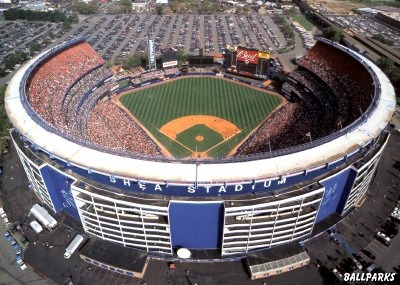
Queens is also home to the Mets. As we speak, they are building a new stadium in Willets Point, replacing Shea Stadium with Citi Field. Despite New York being mainly associated with the Yankees for the Red Sox fans here, Queens residents are huge Mets fans. For them, there’s more of a Mets/Yankees rivalry than anything else. Queens is also home to the U.S. Open tennis tournaments.
For all the dirt, grime, and urban oddities the city is known for, I love it.
Links:
http://queens.about.com/
www.nycvisit.com/
newyork.metromix.com/
Hopkinton, Ma.

Hopkinton, Ma.
Also known as H-town, Hoe-town, and Hop-town by the local youths, Hopkinton is a quiet suburb about 20 minutes outside of Boston. Predominantly made up of affluent and middle class Caucasians, the population is recorded to be around 13,346.
Once a small farming community, Hopkinton still holds much of its rural charm. If you have any intention if visiting, you better have a friend that you can stay with because there’s not even a motel in this quaint, suburban town. Changes are slowly being made, however, such as the addition of a Dunkin’ Donuts® and a Subway® built off the sides of two rebellious gas stations. Other than that, the town officials try their best to preserve Hopkinton’s country feel.
As far as tourist attractions go, there is not much to gawk at. Generally, the inhabitants bustle about their daily routines with nothing particularly exciting happening except for the frequent flow of gossip that everyone passes on.
There are only two times of the year when the whole town comes out and mingles about on the common: once in September for “Pollyarts” and once in April for the Boston Marathon. Both are traditions that have been going on for decades.
Pollyarts is an annual craft show where various creative locals set up booths of homemade jewelry, quilts, snacks, etc. and sell them. The biggest hits at this festival are the bean bag table and the fresh honey stand. All the children beg their parents for a bean bag animal made from a pattern with their favorite sport or hobby on it. As for the adults, they all line up to get their share of the delicious honey. While their parents examine the various sized jars and bee wax candles, the kids can watch the honeybees busy at work in the portable hive that the town beekeeper has brought for the youngsters enjoyment.
After shopping, the town’s people can grab lunch at the hot dog stand or stroll over to get a treat at the van selling fried dough and cotton candy. Entertainment is provided by Patricia Brosnihan’s in-town dance studio. All the young stars line up on the small wooden stage to show off their new moves. This event may not be overly thrilling, but for Hopkintonians it’s a nice, relaxing get-together that everyone can look foreword to from year to year.
The other major town event in Hopkinton is far more stressful for the town’s people. Hopkinton is the start of the Boston Marathon – a difficult 26 mile race through the various suburbs leading up to Boston. For this occasion, many weeks of preparation must go in to making sure the small town is ready for the plethora of people that will soon be carelessly trampling around. The starting line has to be painted, tents need to be posted to protect the runners from harsh weather conditions, and facilities need to be provided so the runners can use the bathroom, if needed, before the race.

On marathon day the streets are crowded with newscasters, town volunteers, and runners from across the globe. Healthy food and beverage stands cover the common and the middle school lawn. The middle school, at this point, has been turned in to what is called “Marathon Village.” Here, shuttle busses come and go, bringing runners and spectators around town since the roads are closed to all other vehicles. After the race, the whole town pitches in to help remove the trash and discarded clothing from the street. The trash is promptly taken away and all the extra clothes are quickly shipped off to local charities and shelters. All in all, the Boston Marathon is a very big deal for Hopkinton and is a very fun experience for spectators and runners alike.
Click Here to see pictures of how Hopkinton has changed over the years
Wednesday, March 5, 2008
Hwei-Ling Greeney
California Gov. Arnold Schwarzenegger was an action hero. Former Minnesota Gov. Jesse Ventura was a professional wrestler. Amherst Select Board member Hwei-Ling Greeney picked asparagus in Hadley.
It was a natural career choice for the ultra-frugal Greeney. If reelected to the Select Board on April 1, she plans to try to run Amherst on her thrifty business model.
She is one of five candidates running for two seats. The others are Stephanie O'Keeffe, Irvin Rhodes, David Keenan and Diana Stein.
Another of her goals is to get other towns that use Amherst's ambulance services to pay a larger share for them than they do now.
She is promoting "social host" legislation that would hold students living off campus in Amherst and Hadley responsible if emergency services have to respond to a renter's house.
Some residents are charging $2 a cup for beer, and "make $800 in one night" to pay their rent, she said. But when things get out of hand, police have to break it up, costing the town money, according to Greeney.
She advocates a policy that doesn't arrest and send people through the court system,wasting town money on policing and not helping anyone. Rather she preaches a policy more centered on civil action against the offenders by doling out fines which can then be used to pay for other services.
Greeney also would like to see UMass contribute more for services some students use such as the public schools for their children.
Greeney says it costs Amherst "$10,000 a year for a regular student and $18,000 for a student with special needs."
She does not want to see expenditure on town maintenance and other services cut down, rather she wants to see town revenues go up. She promotes regionalizing "for an economy of scale" and thinks that Amherst needs to work with the other towns in the Pioneer Valley to better suit all their needs.
Greeney is also very big on cutting down carbon emissions here in the town and wants to see more green projects being taken on in Amherst.
One of Greeney’s campaign goals is to keep Amherst strong by supporting local businesses. “I’m a big proponent of shopping local,” said Greeney, who is not a supporter of bringing “big box stores into Amherst.”
Instead, Greeney hopes to economically strengthen Amherst through “knowledge based, creative economy and tourism.” For example, Greeney supports building retirement housing in Amherst which would bring in a large amount of revenue for the town.
"I must have the ability and the willingness and the desire to work with anyone on the board," she said during a recent interview with UMass journalism students.
Greeney acknowledged meetings can go on for a very long time, sometimes five hours.
"The Select Board members like to talk." Unlike other bodies of government, "We allow the public to come into the conversation; we solicit their opinions," she said.
Greeney maintains she adds a lot to the board.
"I'm a team player, reaching out to neighbors and always the first person on the scene to investigate the issue," said Greeney.
A native of Taiwan and the mother of four grown children, Greeney moved to Amherst from Tennessee with her family, because they were attracted to the school system, she said.Greeney is director of the soup kitchen Not Bread Alone.
Her husband, Robert Greeney, is a physics professor at Holyoke Community College.